
Organic vs. Paid Search on Amazon
Finding the Right Balance for Healthcare Brands
Strategy | E-Commerce Managers, Media Teams
On Amazon, every search query is a battlefield. On the left, organic results ranked by the A9 algorithm based on relevance and sales velocity. On the right and top, sponsored placements purchased by click by advertisers. Between the two lies a strategic space that every consumer health brand must learn to master: the balance between organic search (SEO) and paid advertising (PPC).
This balance isn't static. It evolves based on product maturity, competitive pressure, seasonality, and business objectives. Investing heavily in PPC on a product already dominant organically means burning budget unnecessarily. Relying exclusively on organic for a launch means waiting months before generating volume. The strategic truth lies between these extremes, and it's different for each SKU, each category, and each moment in the product lifecycle.
This article provides a complete decision framework for healthcare brands operating on Amazon: when paid boosts organic, when organic is strong enough to reduce spending, and how to manage this dynamic with precision.
The Fundamental Mechanism: How Organic and Paid Interact on Amazon
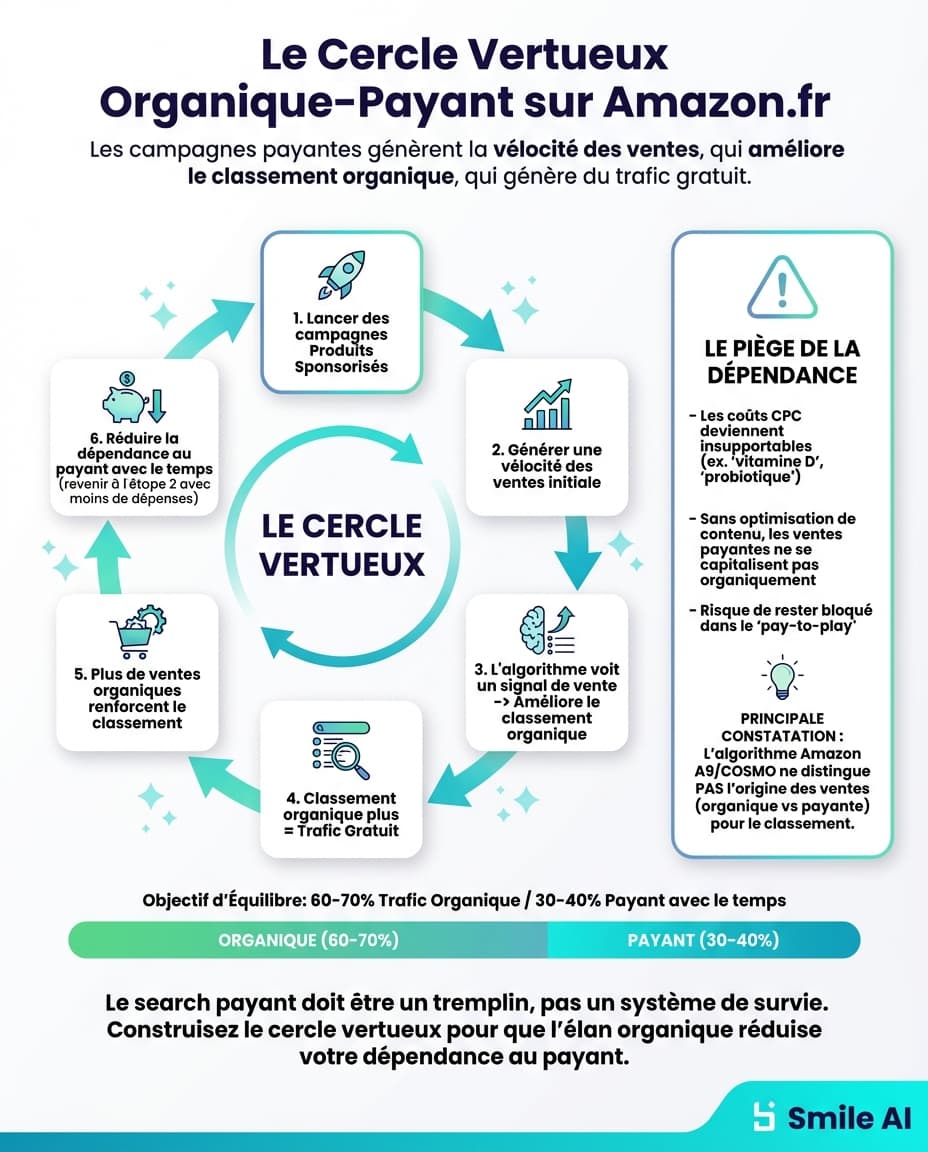
Before discussing strategy, we must understand the mechanics. On Amazon, organic search and paid advertising aren't two independent systems. They form a feedback loop, sometimes virtuous, sometimes costly.
The essentials at a glance
Key takeaways from this article in one infographic.
© Smile AI 2026
Ready to dominate the Digital Shelf?
Discover how Smile Analytics helps Consumer Healthcare brands optimize their e-commerce performance across all platforms.
Related articles
The 2026 Pharma E-Commerce Playbook
How Consumer Healthcare Brands Dominate the Digital Shelf in the United States
Pharma Retail Media in the United States
The Complete Guide to Advertising on Amazon, CVS Pharmacy, and Walgreens