
Alert-driven e-commerce
Why the best teams react in hours, not weeks
Best Practices | E-Commerce Ops, Managers
In healthcare e-commerce, time is a damage multiplier. An undetected stock-out for 48 hours on Amazon.co.uk, and your organic ranking drops 20 positions. An unauthorised content change on a Boots product listing, and non-compliant health claims remain online for two weeks. A competitor launching an aggressive promotion on Superdrug, and market share evaporates before your team even opens their dashboard.
The difference between high-performing e-commerce teams and the rest isn't found in the quality of their strategy. It lies in their reaction speed. The best teams detect problems in minutes, react in hours and resolve within a day. The others discover problems in weekly reports, analyse them in monthly meetings and act when the damage is done.
This article explores the mechanisms of alert-driven e-commerce: why reactivity has become the primary competitive advantage in Consumer Healthcare (CHC) in the UK, how to build an alert hierarchy that works without overwhelming teams, and how to transform every alert into concrete action through pre-established response playbooks.
The real cost of delayed reaction in healthcare e-commerce
Before discussing solutions, let's establish the diagnosis. Reactivity isn't an organisational luxury: it's an economic imperative. Every hour of delay in detecting and resolving a problem has a measurable cost, and in the UK CHC sector, these costs accumulate faster than one might think.
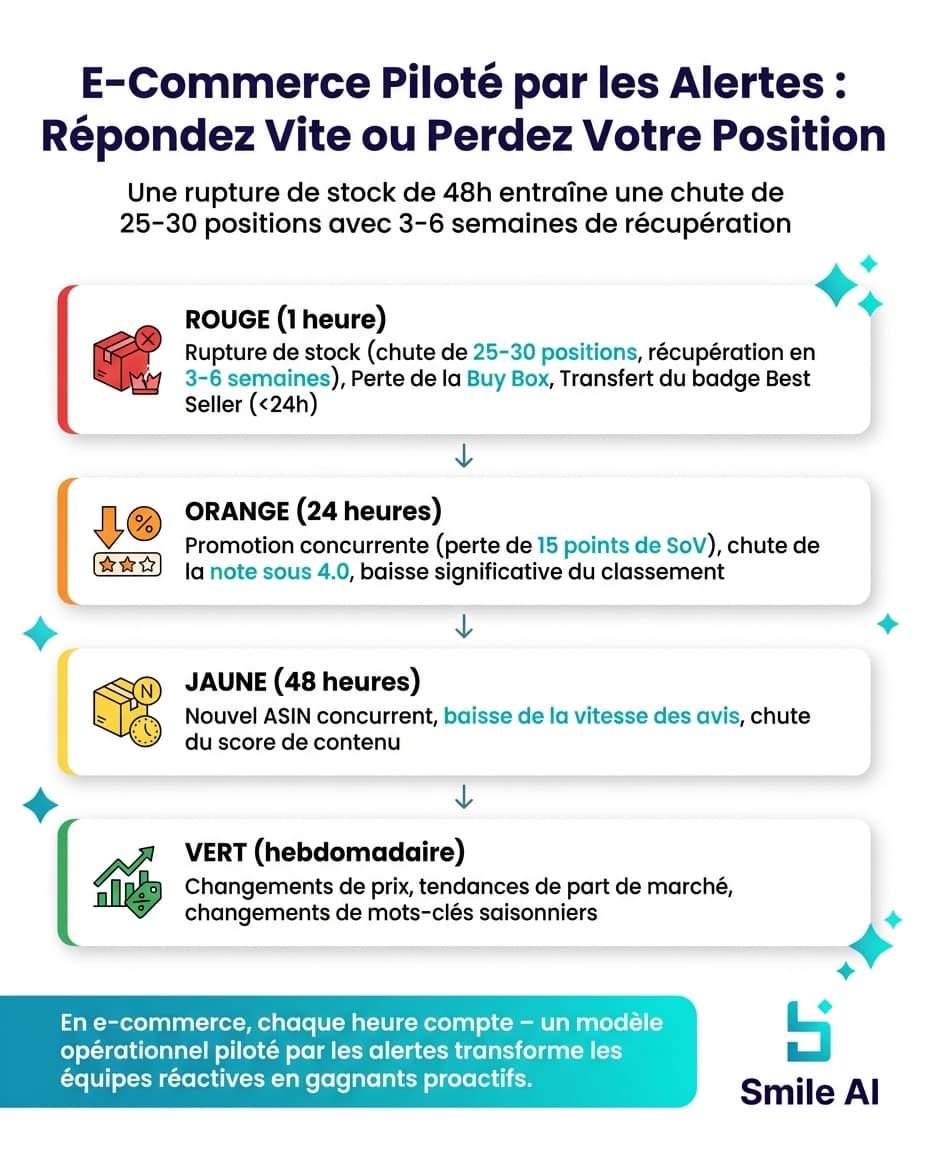
The essentials at a glance
Key takeaways from this article in one infographic.
© Smile AI 2026
Ready to dominate the Digital Shelf?
Discover how Smile Analytics helps Consumer Healthcare brands optimize their e-commerce performance across all platforms.