
Structured Data, Schema Markup and AI
The Technical Foundations of Algorithmic Visibility for Healthcare Brands
Technical Guide | Technical SEO, Developers, Content Ops
Artificial intelligence systems do not read web pages like humans do. They don't look at images, nor do they intuitively "understand" that a product is a magnesium-based food supplement sold in online pharmacies. What they read are structured signals: tags, schemas, and explicit metadata that transform ambiguous content into machine-exploitable information.
In the UK consumer health sector, where online sales still represent a relatively small portion of total pharmacy sales, this technical reality is largely under-exploited. The majority of DTC (Direct-to-Consumer) sites and product listings on marketplaces like Amazon.co.uk, Boots, or Superdrug deploy minimal schema markup, often limited to generic Product schema. Healthcare-specific schemas -- MedicalProduct, Drug, HealthTopicContent -- remain extremely rare.
This is a major strategic problem. Traditional search engines (Google), AI-powered search engines (Perplexity, ChatGPT Search, Google AI Overviews), and marketplace recommendation systems increasingly rely on structured data to select, qualify, and recommend products. A healthcare brand with incomplete or generic markup is structurally disadvantaged in the race for algorithmic visibility.
This article is a comprehensive technical guide for SEO teams, developers, and Content Ops teams of consumer health brands operating in the UK market. It covers the fundamentals of schema markup applied to healthcare, the types of specific schemas to implement, implementation methods on DTC sites, and the impact of structured data provided by retailers on AI recommendations.
Why Structured Data Powers AI Systems
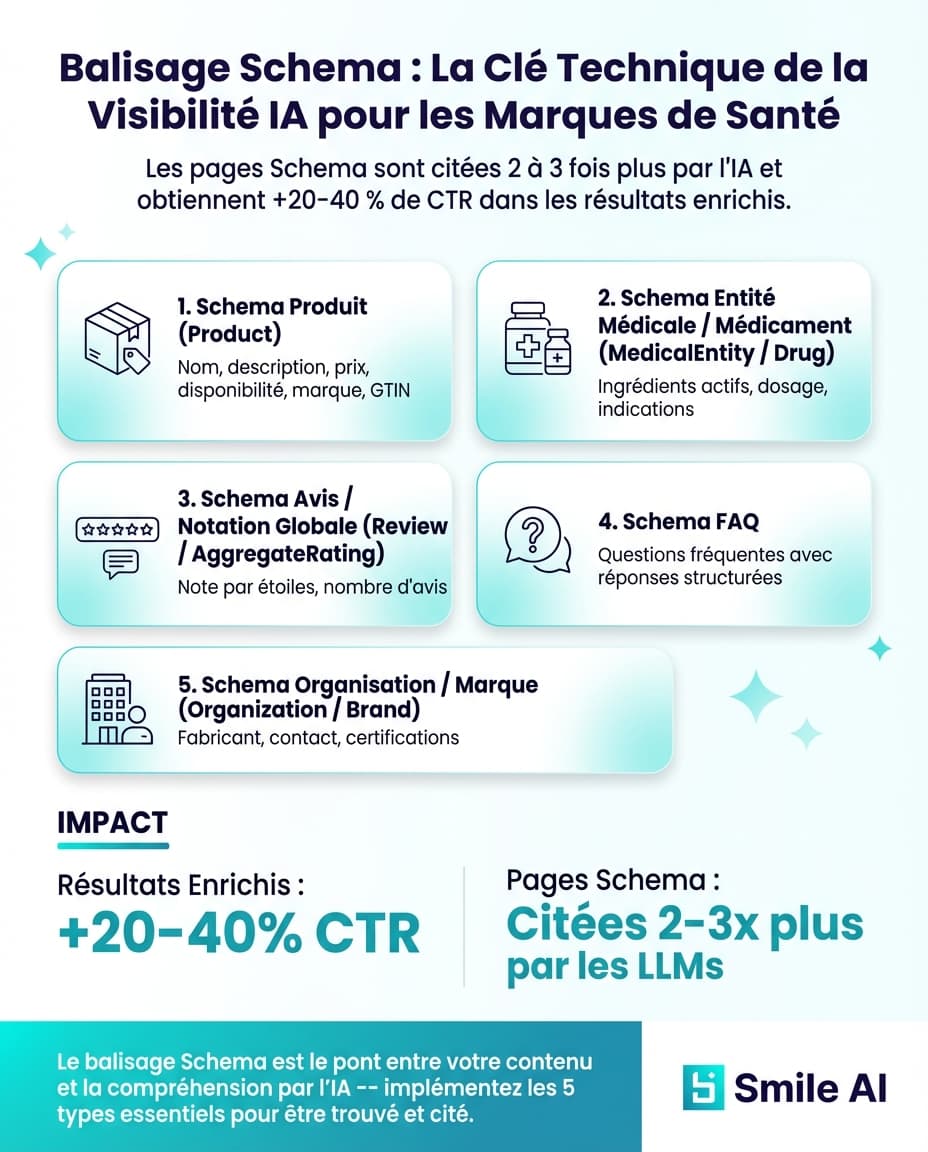
The essentials at a glance
Key takeaways from this article in one infographic.
© Smile AI 2026
Ready to dominate the Digital Shelf?
Discover how Smile Analytics helps Consumer Healthcare brands optimize their e-commerce performance across all platforms.